Why Rice Grains Differ in Length and Shape
Why rice grains differ in length and shape reflects variety and milling. Learn what grain outlines can tell you, how to compare packets and what labels leave unclear.
The common mistake with rice grain length and shape is to treat each outline as a variety label. That can lead you to overlook the names and growing traditions behind the grain. A packet’s shape is a useful clue, but it cannot tell you where a rice comes from or what makes it distinctive.
What can grain shape tell you about rice varieties?
Kernel proportions are among the traits that distinguish rice varieties. A long, slender grain looks different from a compact, rounded one, while some varieties sit between those forms. These visible differences help describe rice, but they do not identify a variety on their own.
Rice labels may give a broad category such as long-, medium- or short-grain. The terms describe general proportions, and their boundaries can vary between product standards and markets. A named variety offers a more specific identification; a length category alone does not.
Look closely at intact kernels when comparing shape. Broken grains and fragments can obscure the outline of the whole kernel, so check whether the packet describes the rice as broken. If you need a particular named variety for a recipe or tradition, choose a packet that names it rather than relying on appearance.
How do variety names add context?
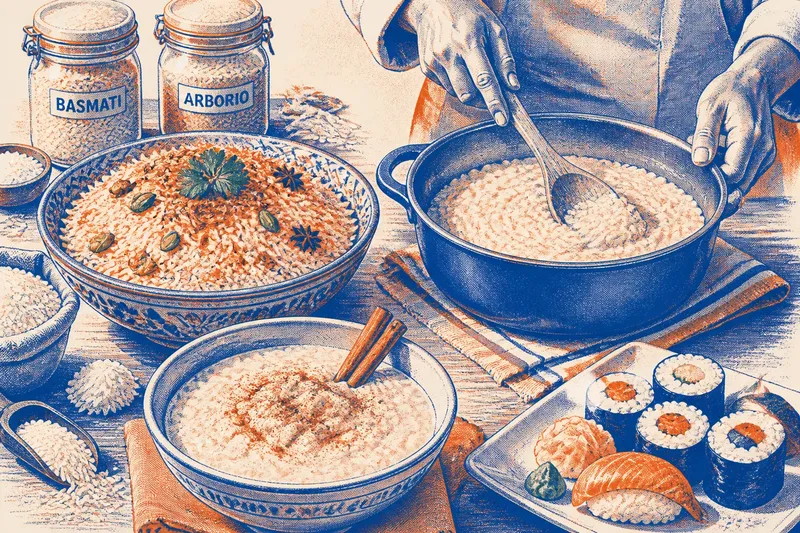
A variety name gives a more precise identity than a broad shape category. Names such as basmati, jasmine and arborio appear on rice packets, but a name is not simply another way to say long, fragrant or round. Each identifies a particular kind of rice, and the packet’s origin and product details provide further context.
Rice varieties are shaped by inherited traits and by the communities that cultivate, select and use them. A familiar name can carry regional associations, but the name alone does not tell the whole story of a particular packet. Check the stated variety and origin together, especially when you are seeking rice for a dish tied to a specific food tradition.
Shape can still help you compare products. If two packets both name a variety, their grains may appear different because of milling, breakage or the way the product is presented. If the variety name matters to your choice, read the full label instead of treating a similar outline as proof that two products are interchangeable.
How does milling affect the grain you see?
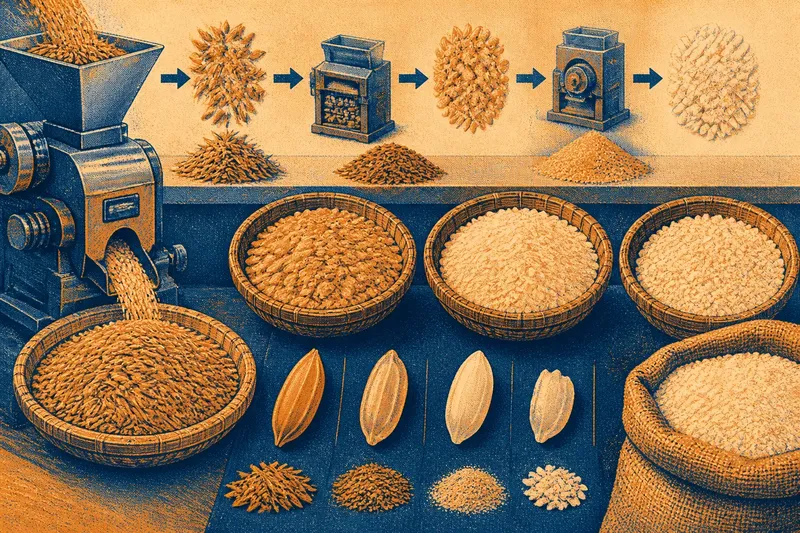
Processing changes the outer layers of a rice kernel. Brown rice retains the bran layer, while white rice has it removed during milling. Parboiled rice has undergone a treatment before milling. These labels describe processing, not grain length or variety, so a packet can combine a variety name, a shape category and a processing description.
That combination helps you read the product more accurately. For example, two packets might both say long-grain, while one identifies a named variety and the other gives only a broad category. Their shared shape label does not make them the same rice. Compare the variety, origin and processing information to decide which packet fits your purpose.
What should you check on a rice packet?
Use the label to answer a specific question rather than guessing from the grain’s outline. Check these details and let each observation guide your next choice:
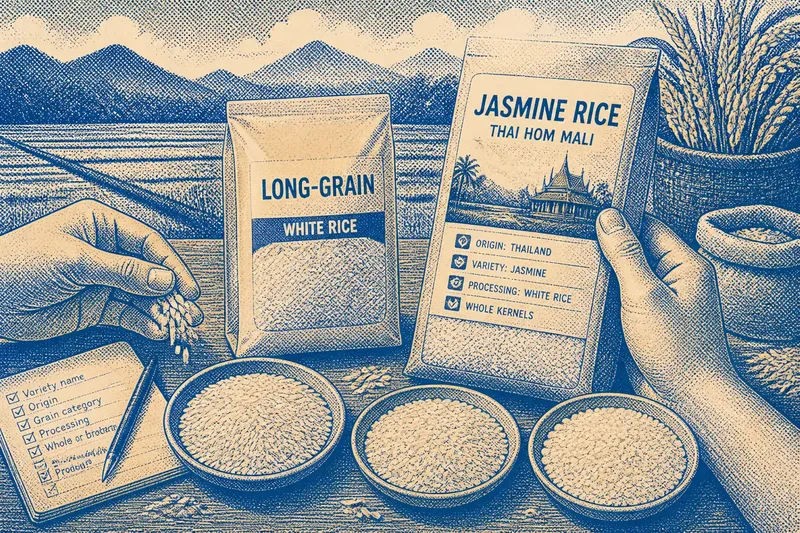
- Variety name: If the packet names the variety you need, choose it; if it gives only a broad category, look for a more specific label when identity matters.
- Origin: If the stated origin matches the rice you are seeking, keep it in consideration; if origin is absent or unclear, compare another packet with clearer information.
- Grain category: If the stated length category suits your intended comparison, use it as a broad description; if you need a particular variety, do not use the category as a substitute for its name.
- Processing: If the packet identifies brown, white or parboiled rice and that is the form you want, proceed; if the description is unclear, choose a product that states its processing plainly.
- Whole or broken kernels: If the packet says broken rice and you want intact kernels, select a product described as whole; if fragments suit your purpose, the broken form may be appropriate.
- Product details: If the packet provides enough information to identify the rice you want, use it; if it leaves key details unanswered, compare another label rather than inferring them from appearance.
Say you are choosing rice for a family dish associated with a named variety. You have two packets: the first says only “long-grain”; the second names the variety and gives an origin that matches what the recipe calls for, but its grains look slightly broader. Treat those as the starting details, check whether either packet identifies broken kernels, then choose the second if the name and origin are the deciding factors. The visible difference is a reason to read the label carefully, not to replace the variety information with a guess from shape.
What do rice shape labels leave unanswered?
Does a long-grain label identify a variety?
No. It describes a broad grain category, not a specific variety. If the variety matters, look for its name on the packet.
Can two packets with the same variety name look different?
They can appear different in the packet because of factors such as milling or broken kernels. Compare the full label and the condition of the grains rather than judging identity by outline alone.
What does “broken rice” mean on a packet?
It indicates that the product includes broken kernels rather than only intact grains. If your choice depends on whole kernels, select a packet that describes them as whole.
Does processing tell me the rice’s origin?
No. Terms such as brown, white and parboiled describe processing. Check the origin field separately if the rice’s source matters to your choice.
How can you compare rice varieties without guessing?
Start with the information that matters most for your purchase: a named variety, a stated origin, a processing description or the condition of the kernels. Use grain length and shape as supporting details, not as replacements for those label facts.
For rice grain length and shape, the useful distinction is between what you can observe and what the packet identifies. An outline can help you describe the grain; the variety name and origin provide stronger clues to its identity. When those details are missing, choose a product with clearer labelling rather than inferring a tradition or variety from appearance.