Rinsing Rice or Not: What Each Choice Changes in the Pot
Rinsing rice or not can change how cloudy the cooking water becomes and how the grains handle after cooking. Choose the method that suits your dish.
The most common mistake with rinsing rice is treating it as a rule that applies to every dish. Rinsing rice or not changes how much loose material enters the pot, which affects the cooking water and can influence how readily grains cling together.
What does rinsing remove from rice?
Rinsing washes away some loose starch and fine particles on uncooked grains. These disperse into the water, making it cloudy. That cloudiness shows that material has left the rice; it does not mean the grain has dissolved or that rinsing removes all its starch.
Starch is also part of the grain itself. Rinsing changes what goes into the pot, but the rice’s variety and the cooking method still shape the finished dish. Treat the rinse as one choice in your preparation, not a way to control texture on its own.
How does skipping the rinse affect the pot?
Without rinsing, more loose material from the grain can enter the cooking water. The liquid may look cloudier, and the grains may cling more readily. How noticeable that is depends on the rice and the recipe.
Skipping a rinse is not a dependable fix for a dish that needs to hold together. If you are making a rice pudding, follow its recipe for the type of rice, liquid and stirring method; those instructions define the preparation more directly than a rinse alone.
Nor does skipping the rinse automatically ruin a pot of rice. The amount of cooking liquid, heat, time and handling all matter. If the result is too soft, changing only the rinse may not address the cause.
What changes when you rinse before cooking?
Rinsing carries some loose starch and particles into the discarded water instead of the pot. This can make the cooking liquid less cloudy and may reduce how much the grains stick together. The change varies, so follow the recipe when it gives a specific instruction.
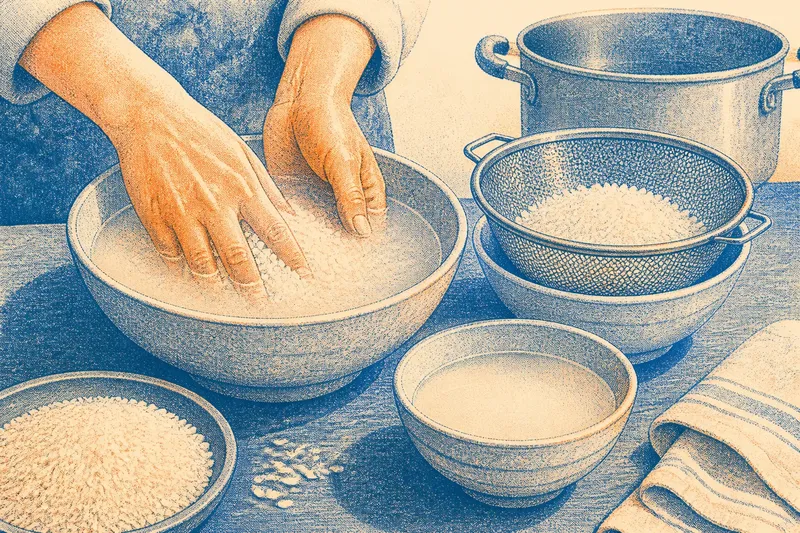
For a bowl rinse, cover the rice with cool water, gently move the grains with your fingers, then pour the water away. Repeat if you want to remove more loose material, and drain before adding the cooking liquid. A fine-mesh sieve under a gentle tap is another option; a forceful stream can scatter grains.
Rinsing can also clear loose particles from handling. It does not replace checking the rice before cooking or following any directions on the packet.
Which rinse routine suits your dish?
Start with the recipe, then consider what happens before the rice reaches the table. Some dishes call for grains to remain distinct; others have a method that deliberately combines rice with liquid or other ingredients. The rinse is only one part of that plan.
- Plain rice served beside a meal: Check whether the recipe or packet says to rinse. If it does, rinse and drain as directed; if not, choose your preferred method and keep the cooking instructions unchanged.
- Rice for a recipe with a defined method: Check its preparation instructions. If they specify rinsing, follow them; if they specify an unrinsed starting point, leave the rice as directed.
- Rice with visible loose particles: Inspect it before cooking. If you see material you do not want in the pot, rinse and drain; if it looks clean, use the recipe’s direction.
- Rice that has been rinsed: Check whether water is still draining from it. If it is, let it drain before measuring the recipe’s cooking liquid; if it is already drained, proceed with the stated method.
- A recipe with no rinse instruction: Check whether the dish depends on a particular rice preparation. If it does, seek a recipe-specific direction; if it does not, pick a method and keep the remaining steps consistent.
- A result you want to adjust next time: Note whether the rice was rinsed, how it was drained and what you observed. If you change the rinse on the next attempt, keep the other ingredients and method steady; if several things change, the cause of any difference will be harder to identify.
Say you have a hypothetical packet of rice, a recipe that gives cooking directions but says nothing about rinsing, and a dinner plan that depends on grains staying separate. You inspect the rice and see no loose particles, then choose to rinse gently and drain it before following the recipe’s stated cooking method. After cooking, you observe whether the grains separate easily; if they do, keep that routine for this recipe, and if they do not, consult the recipe’s rice and liquid directions before changing another part of the method.
Does rinsing change the cooking liquid or time?
There is no single adjustment to cooking liquid or time that applies to every rice after rinsing. Water left on the grains can affect how much liquid enters the pot, so drain consistently when you are following a recipe.
Use the directions for the specific rice and cooking method as your starting point. If you want a different result next time, change one part of the preparation at a time and note what you observe. Avoid adding liquid or extending the cooking time by guesswork.
Should you rinse rice before cooking?
Is cloudy rinse water a reason to keep rinsing?
Cloudy water shows that loose material has dispersed, but it does not provide a required stopping point. Follow the recipe’s direction or stop when the rice looks clean enough for your preparation.
Can rinsing change how grains cling together?
Rinsing carries away some loose surface material, which may influence how the grains behave in the pot. Rice variety, liquid and cooking method also affect the result, so do not rely on rinsing as the only adjustment.
Does rinsing remove nutrients?
Rinsing may carry away some material from the grain’s surface, and the effect depends on the rice and how it has been processed. For a product-specific nutrition question or a dietary need, check the packaging and consult a qualified nutrition professional.
Should every recipe start with rinsed rice?
No. Use the recipe’s instructions where available, since they are written for a particular preparation. If the recipe is silent, choose a routine and keep the rest of the method consistent.
How can you keep your rice routine consistent?
Record the rice you used, whether you rinsed it, how thoroughly you drained it and what you noticed after cooking. If the result suits the dish, repeat those choices; if it does not, check the recipe’s rice and liquid directions before altering the method.
For a quick decision about rinsing rice or not, begin with the recipe and inspect the grains. Rinse and drain when the instructions call for it or when you want to remove visible loose particles; otherwise, follow the stated preparation and avoid changing several variables at once.