From Harvest to Sack: The Stages of Rice Milling
Rice milling turns harvested paddy into brown, white or parboiled rice. Follow the husk and bran through each stage to understand what reaches your sack.
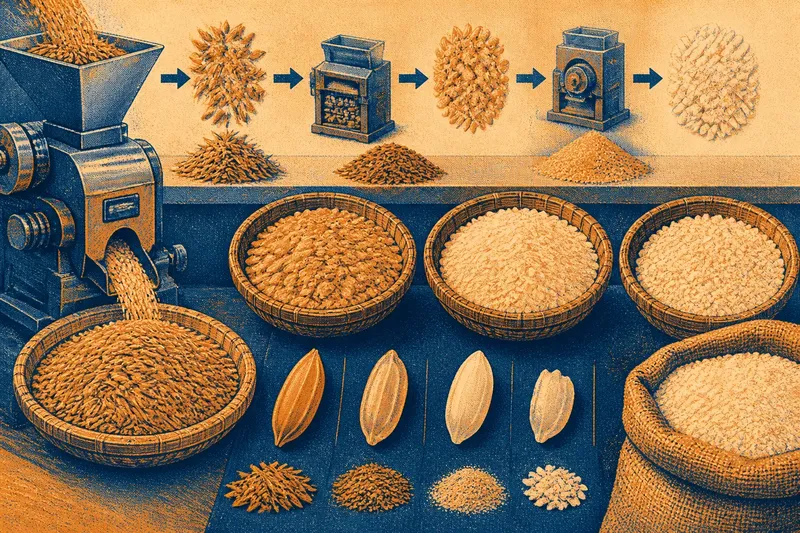
The common mistake is to treat rice milling as a single polishing job. In fact, the mill removes separate layers in sequence; skip or alter a stage and the grain in the sack changes, along with its texture, keeping qualities and cooking behaviour. Rice milling starts with paddy: harvested grain still enclosed in its tough outer husk.
What arrives at the mill?
Freshly harvested paddy is not ready to eat. It may contain moisture, loose straw, weed seeds, dust and stones, so the first work is preparation rather than husking. A cleaner, more uniform batch is easier to process without carrying field debris into later stages.
Moisture matters too. Paddy is dried to a level suitable for storage and milling, according to the mill’s equipment and handling practice. Grain that is too damp can be difficult to store; overly dry grain is more liable to crack during processing. The target depends on the grain and local conditions, so millers follow their equipment guidance and applicable handling rules.
How is the husk removed?
A paddy separator or husker loosens the husk from the grain. The husk is the dry outer casing, not the bran layer beneath it. Removing it exposes a kernel still wrapped in bran, with the germ attached at one end.
Husking is a point where careful adjustment matters. The aim is to separate the loose husk while avoiding unnecessary breakage. A separator then sorts the mixture: unhusked paddy can return for another pass, while husk is taken away from the edible kernels. The husk may be used as fuel or bedding, depending on local practice, rather than treated as part of the rice.
What makes brown rice brown?
Brown rice is the kernel after the husk has been removed but before the bran layers and germ are milled away. Its tan surface is the bran, which contains much of the grain’s oil and fibre. The intact outer layers also help explain why brown rice usually needs different cooking treatment from fully milled white rice.
For a simple visual check, compare a brown kernel with a polished white one: the brown surface remains visible, while the white kernel has a smoother, pale face. The difference is not a separate variety by itself; it is largely a difference in how far milling has gone.
How does bran become polish?
To make white rice, a mill abrades away bran and germ after husking. This is whitening, sometimes followed by polishing to remove remaining bran dust and give the grain a cleaner appearance. These are related but distinct operations: whitening removes layers; polishing refines the surface.
The bran and germ removed in the process can be collected separately as rice bran. Because bran contains oil, it can become rancid if stored carelessly, so handling and intended use matter. The polished kernel is mostly the starchy inner part of the grain. The more thoroughly it is milled, the less bran remains on its surface.
Say a small mill receives paddy from a grower who wants both brown and white rice. The operator can set aside husked kernels before whitening, then mill the rest to the customer’s requested finish; the observable result is two sacks with different outer surfaces and cooking characteristics, even though both came from the same batch.
Why do mills grade and sort the kernels?
After whitening, rice may pass through graders that separate whole kernels from broken pieces. Screens sort by size, while other equipment can remove discoloured grains or leftover foreign material. The purpose is to make the finished batch more consistent, not to change its basic milling identity.
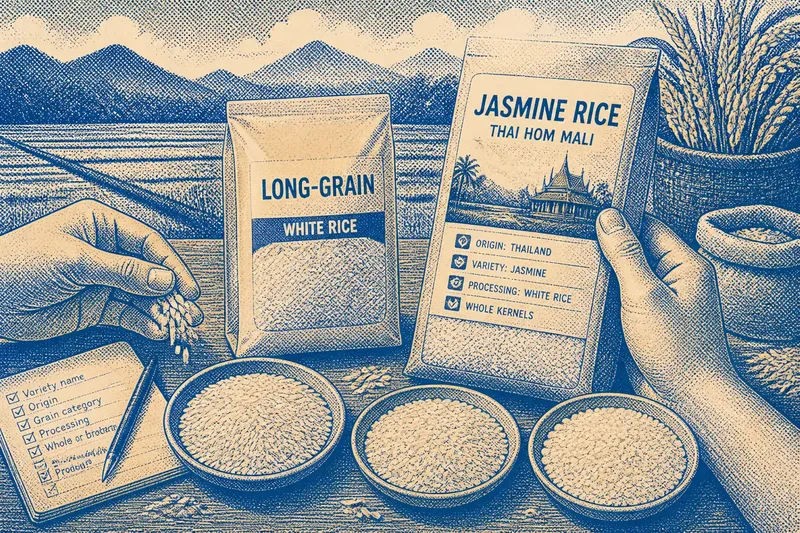
Broken rice is still rice, but it cooks differently from whole kernels because smaller pieces release starch more readily and soften sooner. Mills may sell it as a separate grade or direct it to uses such as flour, brewing or prepared foods. Read the sack label for terms such as whole-kernel, broken or mixed; those descriptions tell you more than the word “white” alone.
Where does parboiling fit?
Parboiling is a treatment applied to paddy before the usual husking and whitening stages. The grain is soaked and heated, then dried; the husk is removed later. This process changes the kernel’s structure and can move some nutrients from the outer layers further into the grain. It is not the same as cooking rice for the table.
Parboiled rice often looks slightly different and tends to hold its shape during cooking. The exact result depends on the process and the rice itself. Labels may also use terms such as converted rice, so check the package description rather than assuming every parboiled product was processed in an identical way.
Which rice milling questions come up most often?
Is brown rice simply unpolished white rice?
It is the same basic kind of kernel at a different milling stage: the husk is removed, but much of the bran and germ remain. White rice has had more of those outer layers removed.
Does polishing add a coating to rice?
Polishing usually refers to refining the grain’s surface after whitening, not adding a coating. If a product’s label makes a specific claim about treatment or ingredients, use that label and the manufacturer’s information to interpret it.
Why are some sacks labelled parboiled?
The paddy was soaked and heated before milling, then dried and processed. That earlier treatment affects the finished kernel, so parboiled rice is not just ordinary white rice with a different name.
What happens to the removed layers?
The husk, bran and germ are separated from the edible kernels during processing. Their later uses vary by mill and region; they may be put to use in animal feed, oil production, fuel or other products.
What should you look for on a sack?
When choosing rice, connect the label to the milling stage rather than relying on colour alone. Brown, white and parboiled describe different processing outcomes, while terms such as polished and broken provide further clues. A sack may combine these details, for example by naming both a white finish and a broken grade.
- Brown: husk removed; bran largely retained.
- White: bran and germ milled away to the stated finish.
- Parboiled: paddy treated before milling, with a distinct finished kernel.
- Broken: pieces sorted apart from whole kernels.
- Polished: surface refined after whitening; the term does not mean a new rice variety.
Rice milling is easiest to understand as a sequence of separations: clean and dry the paddy, remove the husk, then decide how much bran to retain and how to grade the kernels. Knowing those stages makes a sack’s description more useful: it tells you what was taken away, what remains and why the rice may behave differently in the pot.