A Pantry Check for Rice Before the Next Shop
A pantry check for rice helps you group open packets, spot what needs using next and shop for the meals you actually plan to cook.
The common mistake in a pantry check for rice is buying another packet before looking behind the one already open. The result is several half-used bags, uncertainty about which one to reach for and rice left to sit while a fresh pack gets opened. A calm check before your next shop can turn that clutter into a simple cooking plan.
What should you gather before checking the shelf?
Choose a clear stretch of worktop, a clean tea towel and a pen or your phone’s notes app. Bring out the rice stored in cupboards, tins and lidded tubs, including packets tucked behind other staples. Keep everything dry and away from the hob while you sort it.
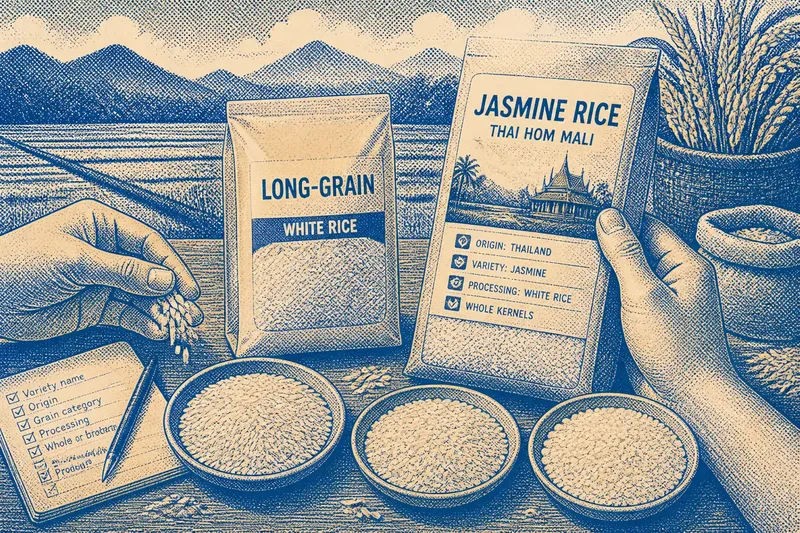
Read each packet before moving its contents. Note the variety, whether it is open, and any storage or cooking guidance you may want to keep. If you transfer rice to a container, retain the packet or copy its useful details onto a removable label. Do not rely on appearance alone to identify a grain.
Give each packet a quick visual check for dampness, damaged packaging, insects or an unusual smell. If something seems spoiled or contaminated, set it aside rather than mixing it with other rice. For questions about a particular product, follow its label and the manufacturer’s instructions.
Which of three sorting approaches suits your kitchen?
There is no need to decant every packet or build an elaborate inventory. Pick the approach that matches how you cook and how much time you want to spend keeping track.
Group by packet status for a small, busy cupboard
Make two groups: opened and unopened. This is the quickest option if you buy a few familiar types and want to see which packets need attention first. Place opened packets together in a dry, contained area, and keep the unopened ones behind or beside them so the open group is easy to reach.
Group by planned meal for a varied cooking routine
Sort rice by the meals you expect to make, such as a quick side, a packed lunch or a dish that calls for a particular variety. This suits a household that cooks different kinds of rice and tends to shop for planned meals. Keep the packet information with each group so a meal idea does not prompt a mistaken substitution.
Group by use-next order for crowded shelves
Place the packet you intend to use soon at the front and less urgent packets behind it. This works well when shelf space is limited and you prefer not to maintain notes. It depends on remembering to move the next packet forward when the front one is finished, so choose another method if the cupboard is shared or easy to forget.
How can you choose what to use next?
Start with opened packets that are in good condition, then consider what you already plan to cook. The aim is not to force rice into a meal that does not suit it; it is to let what is on hand inform a meal you would welcome anyway.
Check whether a packet is labelled for a specific dish or cooking method, and keep that detail in view. If two open packets appear similar but you cannot identify them confidently, keep them separate rather than combining them. A small label or a note beside the packets can prevent guesswork later.
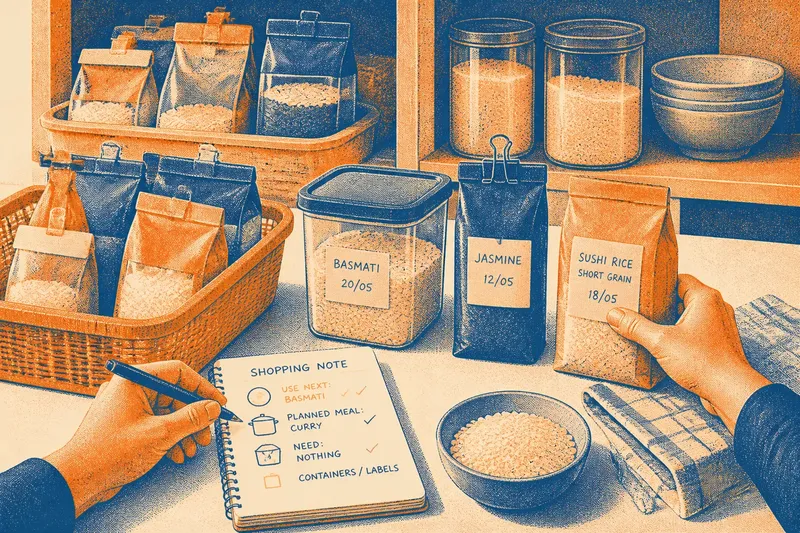
Say you find an open packet of basmati, a sealed bag of short-grain rice and no rice planned for tonight. If you are making a curry later in the week, put the basmati at the front and add that meal to your shopping note; keep the short-grain rice available for a dish that suits it. The observable result is a clear next choice without opening another packet just to decide.
How should you keep opened packets easy to manage?
Use a clean, dry, lidded container if that suits your cupboard, or fold and secure the original packet if it remains intact. Keep the label or a note with the rice when transferring it, and avoid using a container that still holds crumbs or moisture. Store it in a dry place away from strong heat and household chemicals.
If several packets are open, put them in a shallow basket or tray so they can be lifted together. That makes it easier to see what is there without shifting tins and jars each time. A small piece of masking tape can carry the variety and the date you opened the packet, if you find that reminder useful; it is an optional cue, not a promise about how long the rice will keep.
What should you add to the next shopping note?
Shop from the gap between what you have and what you expect to cook. Before writing down rice, check whether an open packet already suits the meal, whether a planned dish needs a particular variety, and whether the remaining quantity looks adequate for the people you expect to serve. Your own household portions and recipe instructions are better guides than a generic rule.
- Write down a variety only if a planned meal calls for it.
- Mark a packet as “use next” if you want a reminder before you shop.
- Note a storage container or label if an open packet needs one.
- Leave rice off the list if the cupboard already holds a suitable packet for your next meals.
- Keep uncertain or damaged food out of the meal plan until you have resolved the concern.
This short list keeps the shop tied to actual cooking rather than the impression that the shelf is empty. If plans change, the note can change too; it is there to reduce duplicate buying, not to dictate the week’s meals.
What do readers often ask about a rice pantry check?
Should different rice varieties be mixed together?
Keep varieties separate when you cannot identify them or when their intended dishes differ. Combining them can make it harder to choose a suitable cooking method later.
Do opened packets need to be transferred to jars?
No. A clean, dry, secure original packet may be convenient, while a lidded container can help contain loose grains. Choose the option that keeps the rice dry and its identity clear.
How often should I check the rice cupboard?
Link the check to a routine you already have, such as making a shopping note or clearing space for groceries. A quick look before buying rice is often enough to catch open packets and avoid an unnecessary duplicate.
How can the next pantry check stay simple?
Keep one method rather than changing the whole cupboard each time: group by packet status, by planned meal or by use-next order. Put the rice you expect to cook soon where you can see it, and make the shopping note reflect meals rather than habit. A pantry check for rice works best when it takes less effort than opening a new packet without looking.